

Case study
Water Resources Development and Climate Resilient Agriculture Programme – Afghanistan
Building water security and climate resilience at national scale
Client: Asian Development Bank (ADB)
Executing Agency: Ministry of Finance, Government of Afghanistan
Implementing Agency: Ministry of Rural Rehabilitation and Development
Region: Afghanistan
Year: 2020 to 2021
Prime Consulting Role: Technical design, feasibility assessment, climate and safeguards analysis, community engagement, risk management
Overview
Water security sits at the heart of Afghanistan’s food system and rural economy. With nearly 80 percent of the population dependent on agriculture, access to reliable irrigation determines whether households achieve reasonable harvests or face crop failure. Climate variability, drought cycles and ageing community irrigation infrastructure have placed increasing pressure on rural livelihoods across the country.
Prime Consulting was engaged by the Asian Development Bank to design a sector scale investment programme to modernise rural water management and support climate resilient agricultural systems across up to 25 provinces. The assignment built on Prime’s long standing experience in Afghanistan and its proven ability to operate safely and effectively in fragile and conflict affected environments.
Rather than focusing on isolated infrastructure, the work aimed to create an investment ready, community grounded framework that combined water infrastructure, climate adaptation, governance strengthening and local capacity building. From the outset, Prime treated the programme as a shared mission with government partners and rural communities, with a strong emphasis on durability, ownership and long term impact.
The challenge
Afghanistan’s irrigation systems face compounding pressures. Many community schemes suffer from poor design, inefficient water use, limited maintenance and weak governance. Climate change has intensified drought and flood risks, while rising temperatures are increasing water demand and reducing reliability of supply.
The challenge was to design a programme capable of operating at national scale while remaining responsive to local conditions. This required balancing technical rigour with social realities, ensuring that proposed solutions were affordable, maintainable and supported by communities who would ultimately manage them.
Delivery also needed to account for complex operating conditions, including security constraints, remote locations, limited institutional capacity and the need to coordinate across multiple government agencies. Without a practical, locally grounded design, there was a real risk that large scale investment would fail to deliver sustained outcomes.
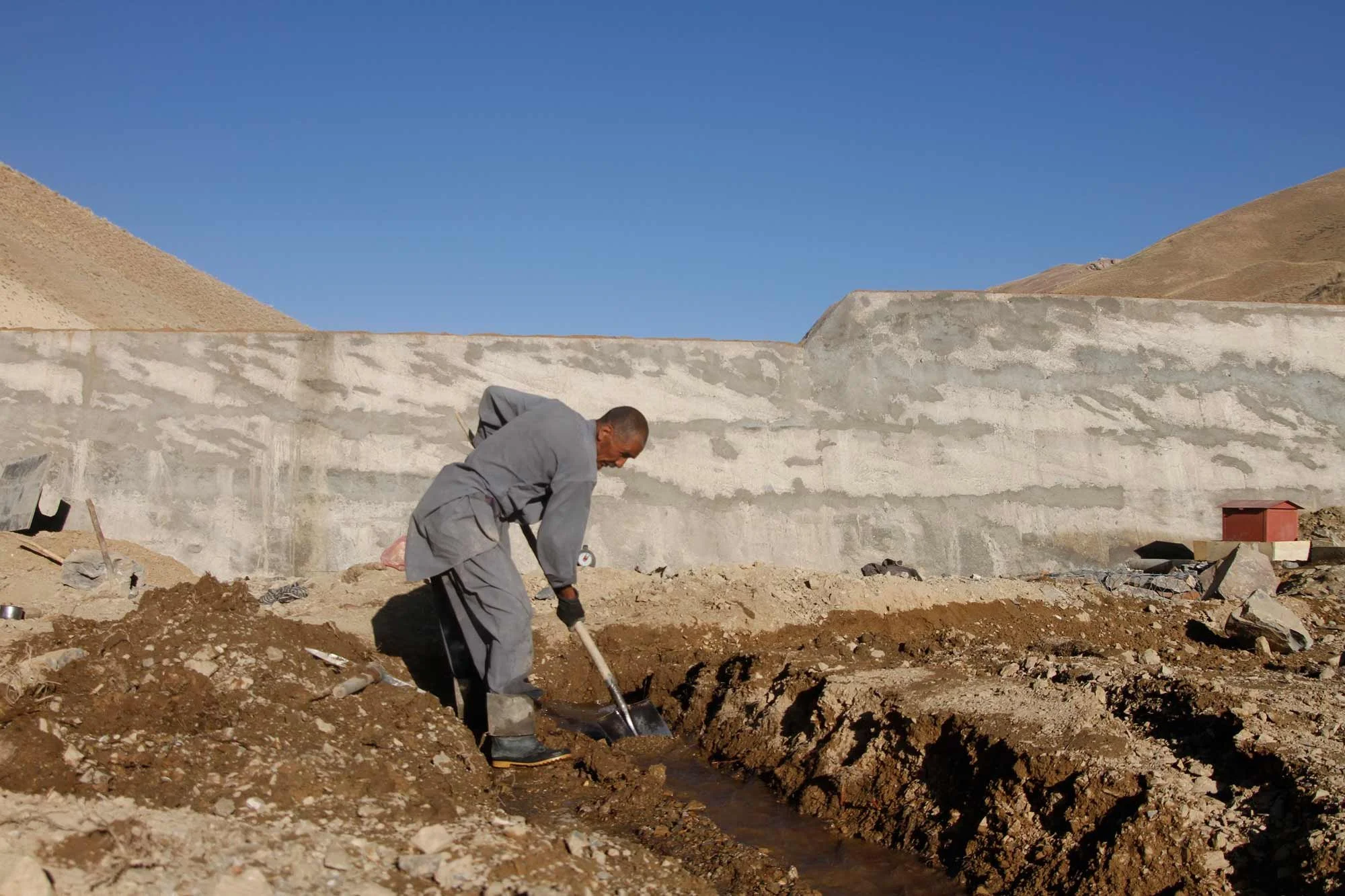
The approach
Prime Consulting was contracted by ADB to deliver the technical assistance required to prepare the Water Resources Development Sector Project, working closely with its Afghanistan based subsidiary Koh e Baba Consultancy Services and local partners.
The team adopted a holistic, problem solving approach that combined engineering, climate science, economics, social development and institutional analysis. Extensive field engagement was undertaken with government agencies, water user authorities and farming communities to ensure production level needs were reflected in the design.
Key elements of the approach included assessing existing irrigation performance, modelling water balances and climate impacts, and identifying practical water saving technologies such as precision land levelling, drip irrigation, water harvesting and solar assisted systems. Community based construction and maintenance models were prioritised to reduce costs and strengthen local ownership.
Prime maintained a lean, agile delivery structure, enabling rapid decision making and adaptation as conditions evolved. Risk management, safety and logistics were embedded throughout the assignment, supported by in country teams with deep local knowledge and relationships.
Delivery and outcomes
The consultancy delivered a full, ADB compliant project design forming the foundation for an indicative USD 700 million national investment programme. Outputs included technical feasibility models, engineering design guidelines, economic and financial analysis, procurement and institutional capacity assessments, and comprehensive safeguards documentation.
The design demonstrated how modernised irrigation and climate adaptive practices could significantly improve water productivity and resilience. Precision land levelling alone was projected to improve water use efficiency by up to 22 percent, while community contracting models were shown to reduce construction costs by up to 60 percent compared with external contractors.
The programme framework targeted up to 25 provinces and an estimated 18,400 communities, creating the potential for long term improvements in irrigation reliability, flood protection and agricultural productivity. Gender and social inclusion were embedded throughout, with women representing approximately 43 percent of the agricultural labour force and targeted for stronger participation in water governance structures.
Social and economic impact
When implemented, the programme is expected to deliver wide ranging benefits across rural Afghanistan. Improved irrigation reliability will support more stable wheat production, reduce vulnerability to drought cycles and strengthen household food security.
Community led construction and maintenance models will create local employment, extend the operational life of infrastructure and reduce dependence on external support. Strengthened water user authorities and governance systems will help ensure that assets are maintained and managed effectively over time.
By integrating climate risk analysis, environmental safeguards and social inclusion into the design, the programme establishes a pathway for sustainable water use that balances productivity with long term resource protection.
Why it worked
The assignment succeeded because it went beyond technical design. Prime Consulting combined deep sector expertise with practical delivery experience in Afghanistan, strong local partnerships and a commitment to shared ownership of outcomes.
The team remained closely engaged on the ground, situationally aware and responsive to changing conditions. By integrating infrastructure, climate adaptation, community engagement and institutional strengthening into a single framework, the project delivered an investment ready blueprint that governments and donors could move forward with confidence.
The result is not just a project design, but a scalable foundation for improving water security, agricultural resilience and rural livelihoods at national scale.

Impact at a glance
Indicative USD 700 million ADB investment framework developed
Up to 25 provinces targeted for irrigation and water management improvements
Approximately 18,400 rural communities within programme scope
Water efficiency gains projected at up to 22 percent
Community contracting models reducing construction costs by up to 60 percent
Gender inclusive design reflecting 43 percent female agricultural labour participation
Long term operational lifespan of community schemes estimated at 20 years